
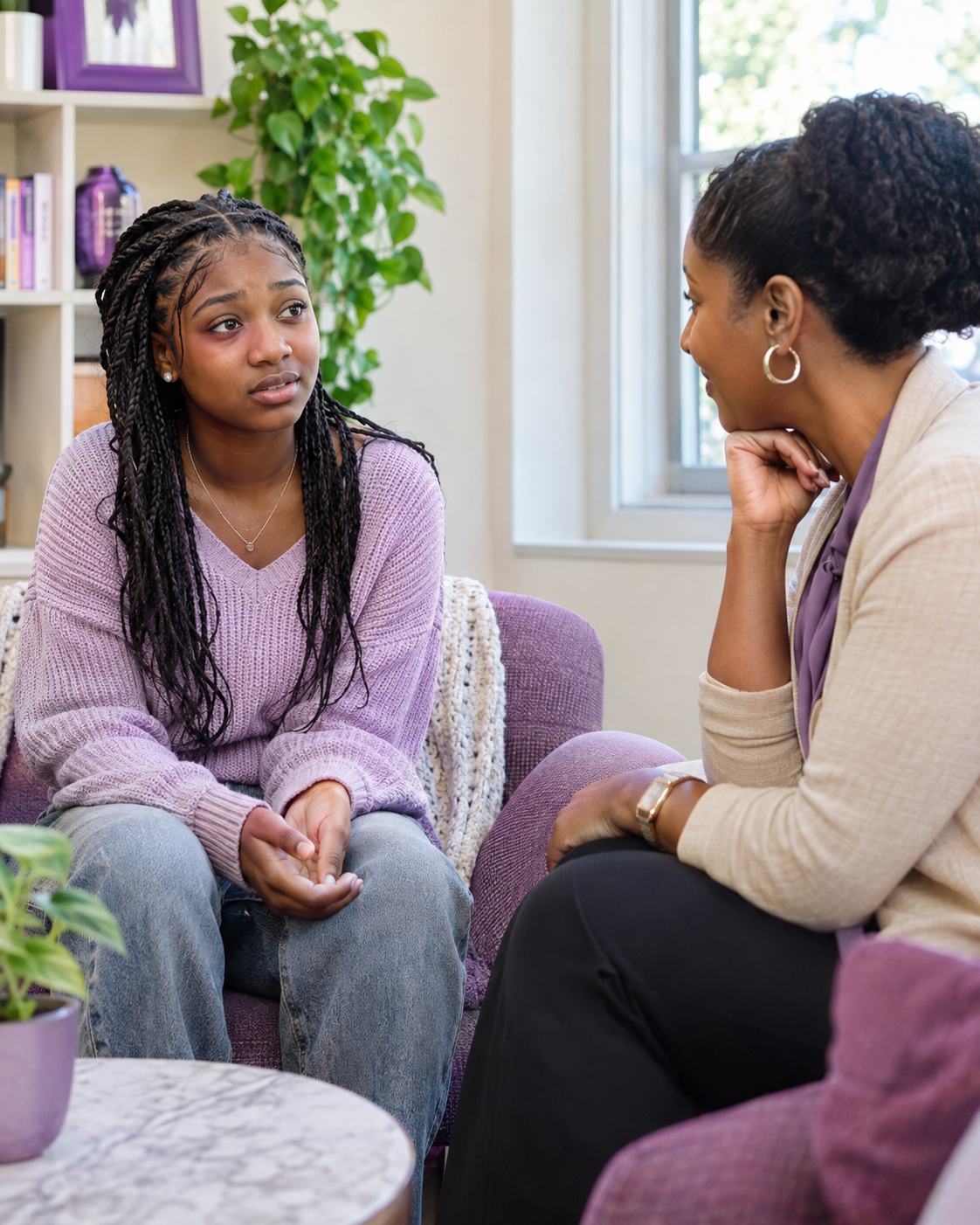
Maybe someone keeps laughing at how you read aloud. Maybe a group chat that used to be fun is suddenly filled with jokes about you. In the moment, you might freeze, laugh along, or wish you’d thought of something to say. Whatever your reaction, you still deserve help. Your first job is to get somewhere safe. The adults you tell are responsible for taking action.
How can you tell if it’s bullying?
Bullying happens when someone uses an advantage, such as popularity, physical strength, or access to embarrassing information, to hurt or control someone. The behavior happens repeatedly or could happen again. It can include name-calling, spreading rumors, deliberately leaving someone out to hurt them, or pushing and threatening them. You can ask for help after the first incident, even if you’re unsure what to call it.
Ages 8–12 · Move toward help
Imagine a classmate keeps calling you a name at recess, and other kids start laughing. Here’s what you can do.
Use a short sentence if you feel safe speaking. Try “Stop calling me that” or “Give me space.” You can skip the words and go straight to an adult.
Go where an adult can see you. Walk toward the teacher on duty, the bus driver, or another adult nearby. If someone blocks your way or starts hurting you, call out for help.
Tell the adult what happened and ask for help. You might say, “She called me that name again at recess. It happened yesterday, too. Can you help me figure out what to do before recess tomorrow?” If it keeps happening, tell another trusted adult, such as a parent, caregiver, or school counselor.
If it happens in a game chat or a message, bring the device to a trusted adult. You can say, “Someone keeps sending me mean messages. Can you look at this with me?” Leave the message unanswered and ask the adult to help you report and block the account.
Ages 13–17 · Set a boundary and ask for a plan
In middle or high school, bullying can look like a rumor that follows you from class to class or an embarrassing post that classmates keep sharing. You may worry that reporting it will draw more attention. You can ask a trusted adult to speak privately and tell them if you’re worried about what might happen after you report it.
End the interaction when you can do so safely. If a brief reply feels safe in person, try “Don’t talk to me like that” and leave. If people are gathering or the situation feels threatening, head straight toward a staffed area.
Keep a private record. Write down what happened, when and where it happened, and who saw it. For harmful texts or posts, save the messages or screenshots when it’s safe to do so. Leave the messages unanswered, avoid forwarding them, and use the platform’s reporting and blocking tools.
Ask who will help and what happens next. You might say, “This keeps happening after practice, and I’m worried it’ll get worse if they find out I told you. Can we make a plan for how I’ll leave practice safely and who I should go to if it happens again?” If the behavior continues, tell a parent, caregiver, counselor, or school administrator and share what you’ve already reported.
If you’re in immediate danger, get to a safe place if you can, call out for help, and call 911 in the United States or ask someone nearby to call. Getting help comes before saving messages or explaining what happened.
You can be poised and still need help
At The Eastern School of Etiquette, we say, “Poise is Internal. Grace is Expressed.” You can feel shaken and still make a wise choice. Sometimes that means walking away with a friend. Sometimes it means going back to the counselor and saying, “I told someone last week, and it’s still happening.” You deserve to feel safe at school, with friends, and online. Keep telling trusted adults until someone helps you make a plan and follows through.